Democratic opposition of Belarus abroad will train future officials.
04 April, 2023
On April 3, Belarusian democratic forces launched an educational program for future female and male civil servants. It is part of the “Personnel Reserve for a New Belarus” project, aimed at selecting and preparing managers capable of implementing democratic reforms in Belarus.
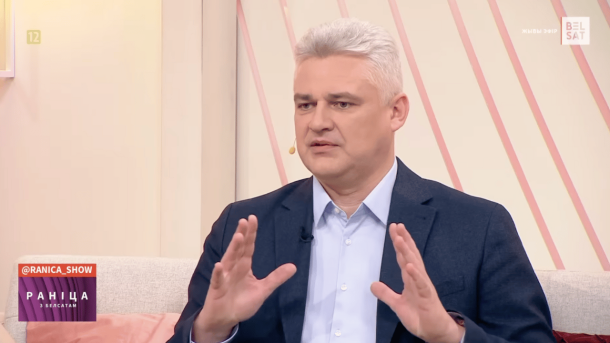
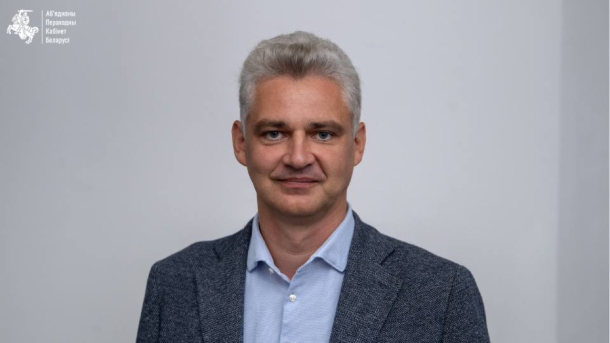
How many people have signed up to learn governance under conditions of ongoing repression, who will teach the new officials and what they will be taught, and what all these people will do while Alexander Lukashenko remains in power — these questions were asked by a journalist from Current Time to Yury Gubarevich, responsible for preparing the personnel reserve within the United Transitional Cabinet, and Artyom Proskolovich, a former official of the Belarusian presidential administration and now an expert at the National Anti-Crisis Management.
“They risk everything and can easily end up in prison”: who this program is for
According to Yury Gubarevich, around 300 applications were submitted for participation in the “Personnel Reserve for a New Belarus” program. The average age of applicants is 41. Most applications came from people working in education, IT, politics and civic activism, as well as from civil servants and business representatives. 170 people expressed a desire to take part in a pilot educational program that launched on April 3.
The “Personnel Reserve” invites not only Belarusians who have emigrated, but also those who remain inside the country, including current government officials. According to Yury Gubarevich, those living and working in Belarus make up about 40% of participants. In the view of Artyom Proskolovich, under current conditions this is “close to an act of bravery”:
“The situation in the country is such that people delete their browser if they are accidentally redirected to resources that in Belarus may be considered seditious or extremist. But even under such total repression, Belarusians find the strength to participate in the campaign. Participants have no scholarships in the educational program, no job guarantees after training, they risk everything and can easily end up in prison, but they still choose to contribute to Belarus’s future.”
For participants’ safety, the pilot educational program is conducted via Zoom Webinars (an interface closer to a broadcast than a video meeting), which allows everyone to remain anonymous, Yury Gubarevich explains. In a 2022 interview with Euroradio, he also emphasized that participants’ personal data will be stored in encrypted form and that even organizers will not have access to personal information.
The pilot program content was developed by Belarusian experts, drawing on the experience of institutions such as the Simpa BIPART school for young managers, the “Flying University,” and the European Humanities University. The author of the program is Sviatlana Matskevich, a PhD in pedagogy with experience working at the Belarusian Ministry of Education. The teaching staff includes about 15 lecturers who worked at EHU and BSU, including those forced to leave Belarus after the 2020 protests and repression: former associate professor at the Faculty of International Relations of BSU, historian Rosa Turarbekova; former researcher at the Institute of History of the National Academy of Sciences of Belarus Andrei Radaman; former chargé d’affaires of Belarus in Switzerland Pavel Matsukevich, and others. Yury Gubarevich emphasizes that “this is not a project of one political force or group, but a joint effort for Belarus’s future.”
Participants are taught both conceptual skills—analysis, expressing one’s position, evaluating events, cooperation, communication— and practical skills: modern approaches to public administration, key elements of governance in a context of political transition in Belarus. They can also choose a specialization: international politics, local governance, self-government, or economics. The pilot program consists of 60 academic hours over two months, but organizers plan to develop a full program over several semesters, similar to a master’s degree.
Organizers of the “Personnel Reserve” hope to train new Belarusian civil servants who will be able to take initiative and engage as equals with European counterparts. “They will have the right to their own opinion,” says Artyom Proskolovich. “They will feel part of the global community and know the most up-to-date practices in their field.” “Civil servants will no longer feel that initiative is punished,” adds Yury Gubarevich. “This is the main disease of the current system, where you must fit in and not express yourself, because if you have your own opinion and act on initiative contrary to orders from above, it is seen as disloyalty. There will also be a higher level of foreign language proficiency. Any civil servant must be able to communicate freely with colleagues from other countries.”